

M-Files vs Laserfiche
M-Files vs Laserfiche: Metadata-Driven vs Repository-Based Document Management
M-Files and Laserfiche both offer strong document management and workflow automation capabilities, but they are built on fundamentally different architectures.
M-Files uses a metadata-driven, context-first approach, while Laserfiche is built around a repository and folder-based model. This distinction impacts scalability, usability, and long-term governance.
M-Files vs Laserfiche: Which Is Right for You?
| M-Files | Laserfiche | |
|---|---|---|
| Best fit | Metadata-driven document management that helps users find information regardless of where it’s stored | Document management and business process automation for organizations focused on forms, workflows, and records management |
| Processes | Workflow and document automation to streamline document-centric processes | Structured workflow automation with forms, BPM tools, and process-driven automation |
| Governance | Built-in security, permission controls, and compliance capabilities | Strong records management, auditability, and compliance-focused governance capabilities |
| Intelligence | AI-powered features that automatically classify and organize information | AI-assisted data capture and automation features focused on forms and document processing |
| Integrations | Connects with systems like CRM and ERP to improve information accuracy | Integrates with business systems and applications through APIs, connectors, and workflow integrations |
Where M-Files Stands Out vs Laserfiche
| Key Capability Difference | M-Files | Laserfiche | Business Impact |
|---|---|---|---|
| Information Architecture |
 Metadata-driven architecture where content is organized by what it is
|
 Repository and folder-based architecture where content is organized by location
|
Metadata-first architecture reduces duplication and scales more effectively |
| Content Organization |
Dynamic views allow one document to exist in multiple contexts without duplication
|
Folder-based organization often requires duplication or manual structuring
|
Eliminates version confusion and improves visibility across customers, projects, and processes |
| Search and Retrieval |
Contextual, metadata-driven search across systems
|
Full-text and field-based search within repositories
|
Faster and more intuitive retrieval, especially in complex environments where documents relate to multiple entities |
| Workflow Automation |
Metadata-triggered and lifecycle-based workflows
|
Strong BPM engine with graphical designer and e-forms
|
Flexible automation adapts to document state changes, rather than relying on structured and form-driven processes |
| AI in Content Management |
Built-in AI for auto-classification, metadata suggestions, and workflow triggers
|
AI features such as Smart Fields for data capture and automation
|
AI reduces manual tagging and improves data quality, which accelerates automation and decision-making |
| Microsoft Teams Experience |
Native Microsoft 365 experience including Teams, Outlook, Copilot, Office, SharePoint, and Azure with contextual access to content
|
Integrations are available but not embedded in the Microsoft ecosystem
|
A native Microsoft experience improves adoption and enables users to work in familiar tools without switching systems |
| Line of Business Integration |
Connects to CRM, ERP, and other systems without requiring migration and supports a repository-agnostic approach
|
Typically optimized for content stored within its own repository
|
Enables a single source of truth across systems and reduces the cost and risk of migration projects |
| Deployment and Flexibility |
Cloud, on-premises, and hybrid deployment options
|
Cloud and on-premises deployment options
|
Hybrid flexibility supports regulatory, data residency, and phased cloud adoption strategies |
| Access Controls and Auditability |
Dynamic, metadata-driven permissions with full audit trails
|
Role-based access controls with auditing capabilities
|
Dynamic permissions reduce administrative overhead and automatically adapt as documents change state |
| Identity Lifecycle Automation |
Permissions and access evolve automatically based on metadata and document lifecycle
|
Access is typically managed through roles and manual updates
|
Reduces risk of overexposure and helps ensure compliance as documents move through lifecycle stages |
| Platform Approach |
Unified metadata-driven platform that connects content, processes, and systems
|
Integrated ECM platform with strong BPM, records management, and repository-centric design
|
M-Files enables cross-system knowledge work and adaptive governance, rather than centralized and process-driven environments |
Ready to See the Difference?
Talk to an expert and discover why organizations across industries choose M-Files over traditional enterprise content management platforms.

“ We had various systems in place that didn't communicate well with each other, making it hard to track changes and ensure consistency. The biggest reason we chose M-Files was the price. It was significantly more affordable than the alternatives while still offering the functionalities we needed. ”
Mike Dayhoff, Director of Toll Architecture Technology, Toll Brothers
Trusted by 6,000+ organizations worldwide across document-driven industries





Experience the M-Files Advantage
Talk to an expert and discover why organizations across industries choose M-Files over traditional enterprise content management platforms.

Built for Microsoft 365 Environments
Microsoft 365 is where work gets done, but information quickly becomes fragmented and hard to control. M-Files brings structure and context to Microsoft content, ensuring information is governed, searchable, and ready for AI.
With metadata-driven automation across Microsoft 365, M-Files helps organizations reduce risk, work faster, and scale information management with confidence. Trusted by thousands of organizations worldwide, M-Files is proven in complex, enterprise environments.
Context-First by Design
The M-Files Difference: Four Requirements for Modern Work
Put Your Documents to Work
Connects documents across systems so teams always use accurate, trusted information.
Automate Document-Heavy Work
Automates filing, routing, permissions, and retention to reduce manual work and ensure consistency.
Meet Teams Where They Work
Runs natively inside Microsoft 365 so documents stay in familiar tools with consistent governance.
Shape to Your Business
Adapts metadata, workflows, and policies to your unique processes, without custom code.
See How M-Files Can Transform Your Business
How Context-First Work Will Evolve in 2026
Context-First Document Management for Modern Work
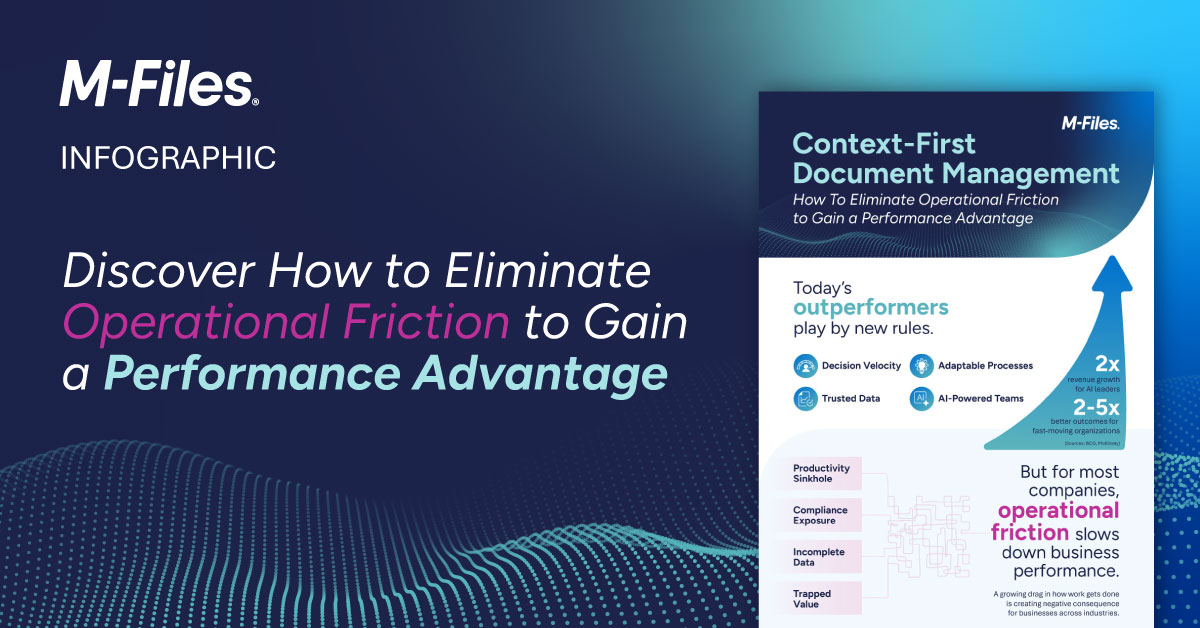
Context-First Document Management
Frequently Asked Questions
Disclaimer: The information presented on this page regarding competitor products, features, integrations, pricing, and capabilities is current to the best of our knowledge as of May 11, 2026. Because competitor offerings may change over time, each comparison page includes a "current as of" date for reference.
All information included has been obtained through lawful and appropriate means, including publicly available sources, and not through any breach of confidentiality obligations or terms of service by us or any third party.
All company names, product names, logos, and trademarks referenced on this page are the property of their respective owners and are used solely for identification and comparison purposes.
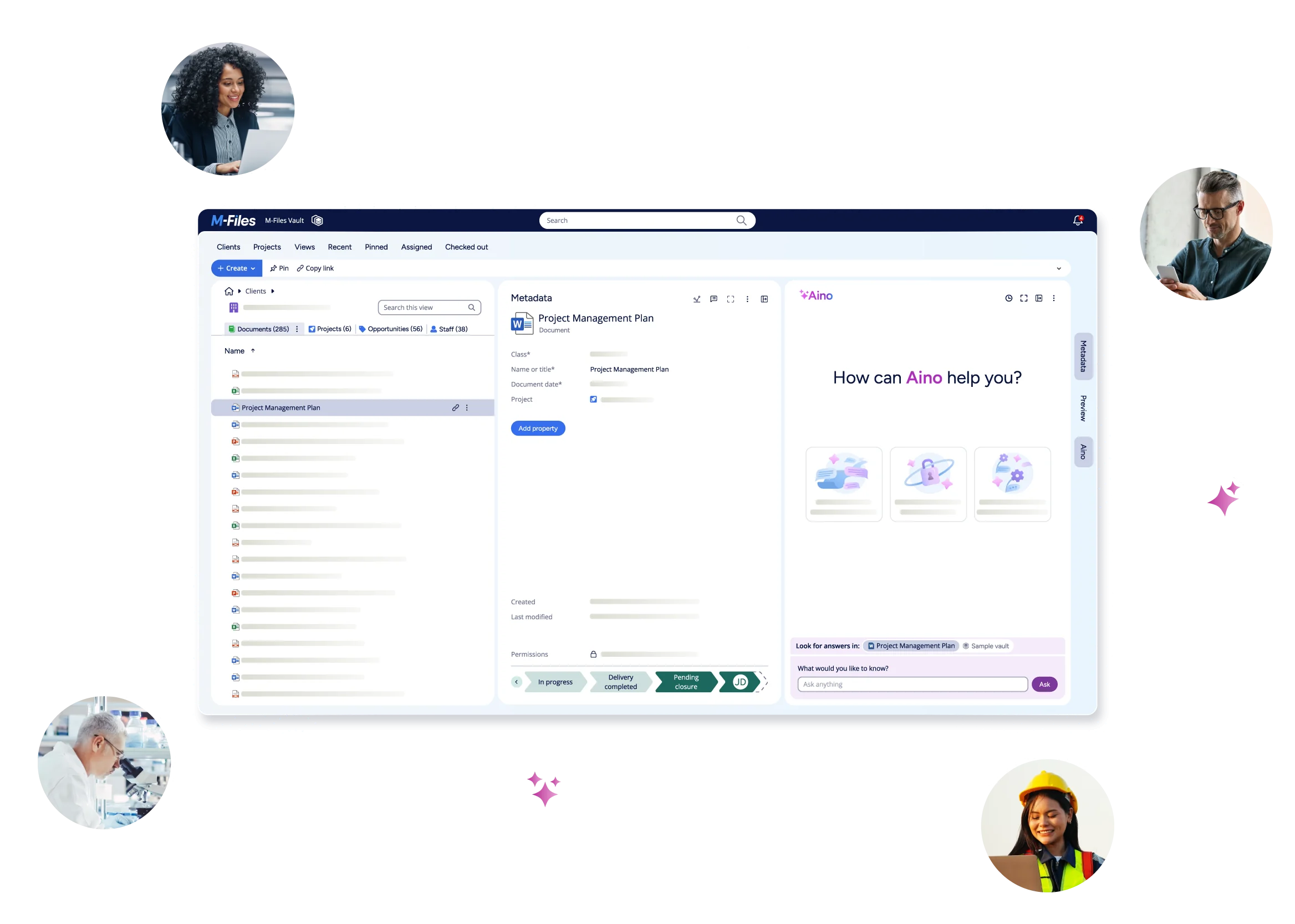
See M-Files in Action


